What do Japanese pigs eat? Our Japan Brand Pork Encyclopedia (日本ブランド豚事典) lists 419 brands (as of October 2026), and 401 of those pages carry a note on feed. Among them, 68 brands (duplicates removed) name at least one of the following: shochu lees (the residue left from distilling shochu, a Japanese spirit), sake lees, tea leaves, ume plums, citrus, seaweed, wood vinegar or charcoal, herbs such as mugwort, natto (fermented soybeans), or kinako (roasted soybean flour). Add sweet potato, and the count rises to 93.
The foundation of the diet, though, is compound feed: grains such as corn, wheat, and barley combined with soybean meal and other protein sources. The mix and the share of byproducts differ by brand, and a few brands use no compound feed at all. Shochu lees or tea leaves are side dishes laid on top of that base. What feels Japanese is the habit of feeding pigs what the land has in surplus, or what it is famous for, and turning that into the brand’s name and story.
What do pigs eat around the world?
Only what primary sources confirm: in the United States, finishing-trial diets published by Kansas State University run from the low 60s to the high 80s in percent corn, with soybean meal ranging from the low teens to the low 30s in percentage terms (trial diets, not a national average). A University of Illinois review also identifies corn as the principal grain in pig diets across much of the United States. Europe cannot be lumped together: a study by Aarhus University researchers and others set a representative Danish diet at 55 percent wheat, 26 percent barley, and 16 percent soybean meal, while the production specification for Italy’s Parma ham allows corn up to 65 percent of dry matter. In Japan, Ministry of Agriculture, Forestry and Fisheries (MAFF) data put corn at about half of all compound-feed ingredients, with 99 percent of fiscal 2025 corn imports coming from the United States.
| Country or region | Main grain and protein source | Nature of the evidence |
|---|---|---|
| United States | Corn + soybean meal | Diet examples from university finishing trials |
| Denmark | Wheat and barley + soybean meal | Representative diet set by university research |
| Italy (Parma ham) | Corn up to 65% (of dry matter); barley and wheat also allowed | Ceiling in the production specification |
| Spain (Iberico, cebo / cebo de campo) | Compound feed made mainly of cereals and legumes | Quality standard (no ratios specified) |
| Japan | Corn about half (of all compound-feed ingredients) | MAFF statistics |
Feeds you find in Japan: from shochu lees to kinako
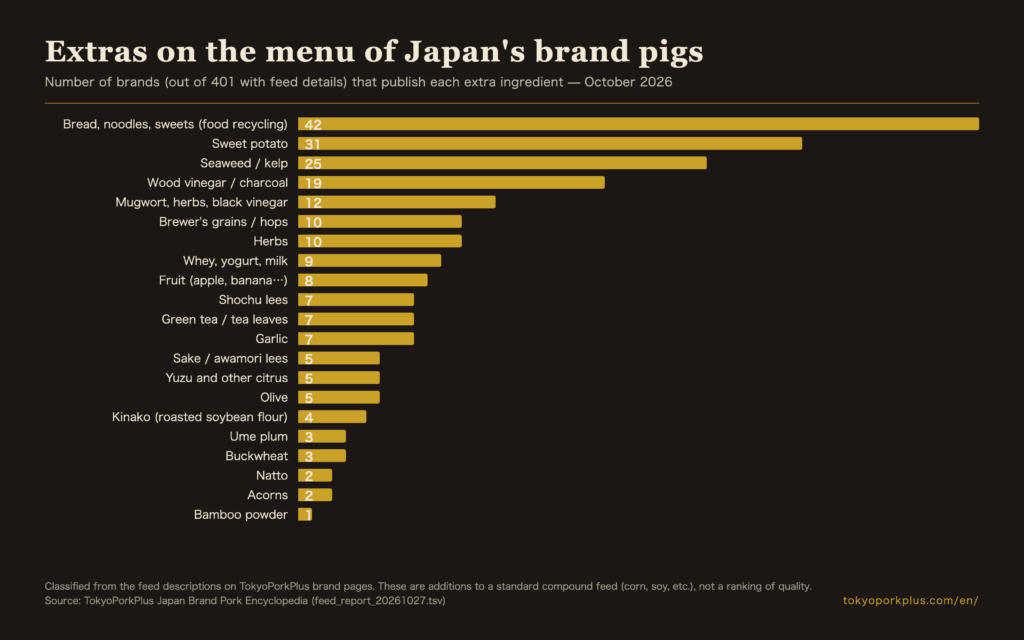
The counts below are the number of brand pages whose Feed section mentions that ingredient (as of October 2026).
Shochu lees (7 brands)
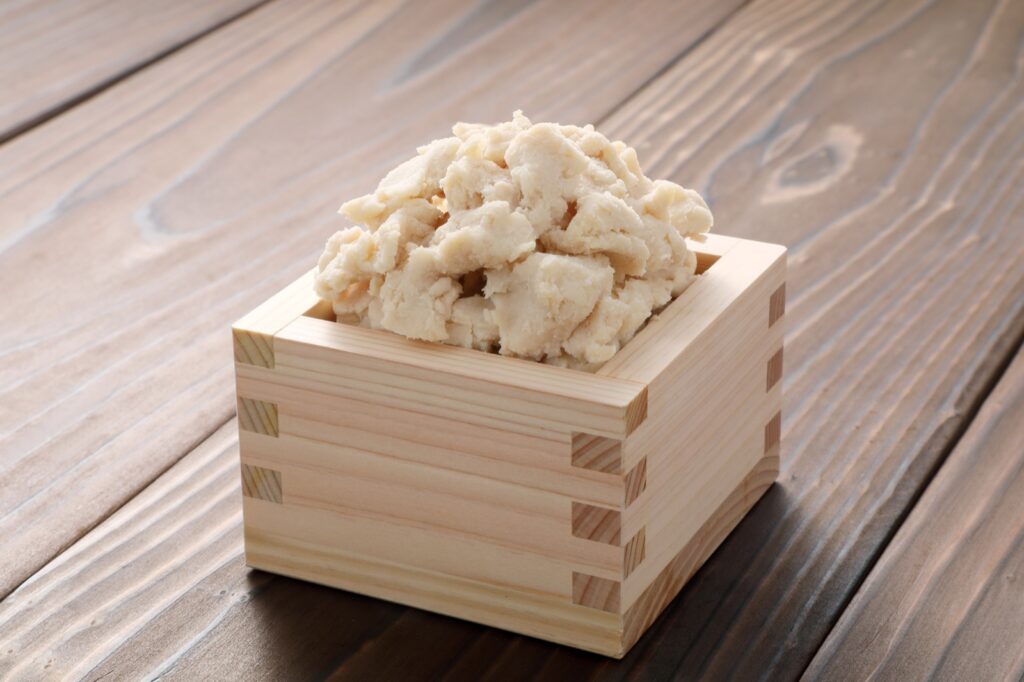
Shochu is a Japanese distilled spirit; the residue left after distillation is called shochu kasu, or shochu lees. Feeding alcohol lees to pigs is not unique to Japan; in the United States, distillers grains from ethanol plants (DDGS) are a standard ingredient. Examples of feeding shochu lees to pigs outside Japan could not be confirmed in the English-language sources we checked (checked October 27, 2026). Imoko Buta (いもこ豚) in Miyazaki Prefecture eats a dedicated feed blending the local feed rice “Ebino-mai” with lees from the sweet-potato shochu “Meigetsu.” Kinun Ton (錦雲豚) in Oita Prefecture gets a liquid feed of unserved school-lunch rice and shochu lees. The producer describes the aim as reducing unwanted odors and enhancing umami.
Sake and awamori lees (5 brands)
Lees from sake, Japan’s rice wine, and from awamori, Okinawa’s distilled spirit, appear too. Golden Boa Pork (Awaji Inobuta) (ゴールデン・ボア・ポーク/淡路いのぶた) in Hyogo Prefecture gets a special feed of Awaji Island feed rice, brewer’s grains, and sake lees. In Okinawa, Yanbaru Ton (山原豚) blends awamori lees, seaweed, and mugwort into a designated compound feed based mainly on small grains (麦類), and Yanbaru Agu (やんばる島豚あぐー) and Yanbaru Shimabuta Agu (やんばる島豚あぐ〜) add awamori lees as well. Ise Akarino Pork (伊勢あかりのぽーく) in Mie Prefecture grows up on an eco-feed of malt residue from a local brewery, confectionery-plant scraps, and a sake brewer’s lees.
Tea leaves, green tea, and tochu tea (7 brands)
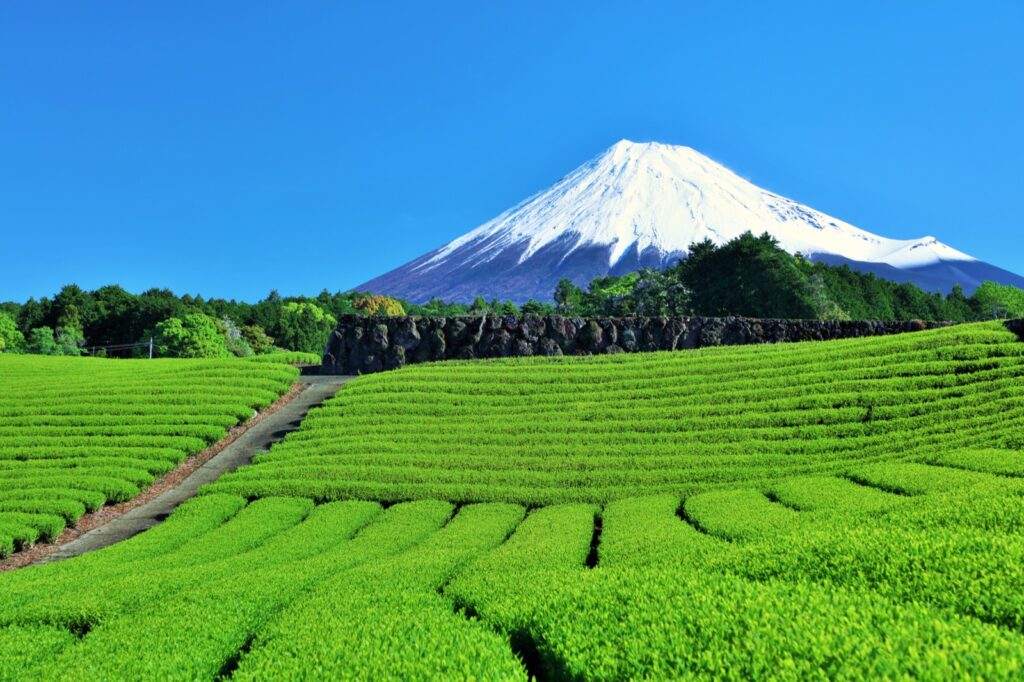
Research on feeding green-tea byproducts to pigs exists in South Korea and Vietnam, but no pork brand outside Japan built around green tea turned up in the English-language sources we checked. TEA-ton (TEA豚) in Shizuoka Prefecture drinks a cold-brewed green tea made with local spring water and tea leaves. Chami Ton (茶美豚) in Kagoshima Prefecture gets, for roughly two months before shipping, a dedicated feed with green-tea powder and sweet potato (or cassava). Komakusa Tochu Tea Pork (岩手山麓健康豚コマクサ杜仲茶ポーク) in Iwate Prefecture gets finely ground, farm-grown tochu tea leaves (tochu is a tea made from eucommia leaves) added in the late finishing stage.
Ume plums, yuzu, hebesu, and mikan (mandarin oranges): ume 3 brands, citrus 5 brands
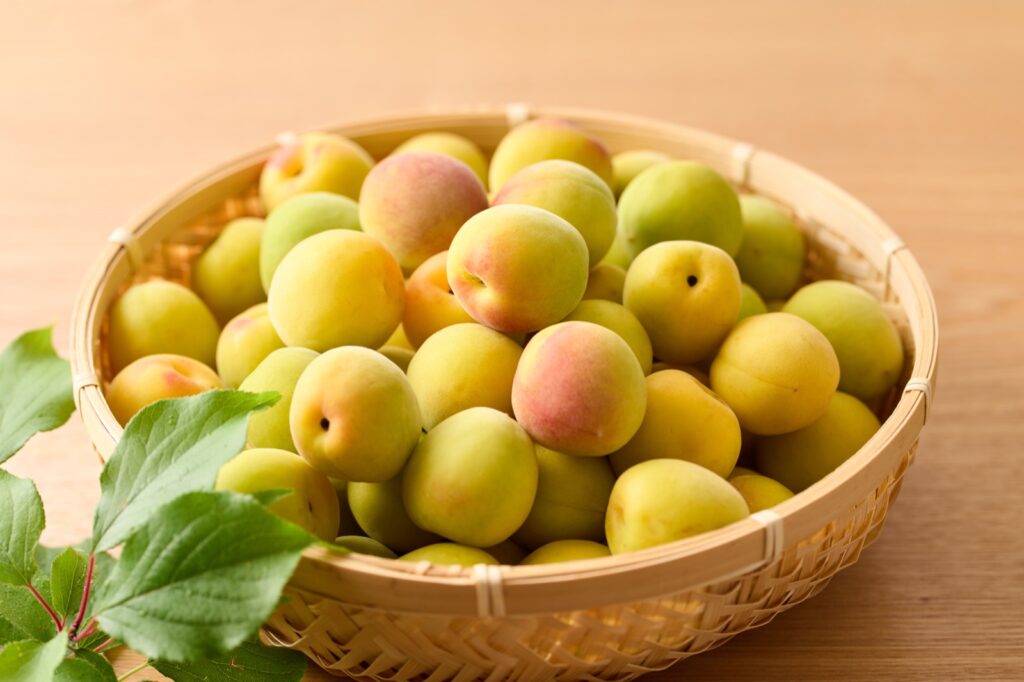
Ume is the Japanese apricot, usually called a plum in English. We found no example of feeding ume to pigs outside Japan in the English-language public documents and papers we checked. Kishu Umebuta (紀州うめぶた) in Wakayama Prefecture combines food byproducts with an ume-vinegar extract made in the prefecture. The “Ume Premium” line of Naniwa Pork (なにわポーク) in Osaka Prefecture is fed crushed plums left over from making umeshu, the plum liqueur, and Amakusa Bainiku Pork (天草梅肉ポーク) in Kumamoto Prefecture receives an ume-pulp extract. Hyuga Hebesu Ton (日向へべす豚) in Miyazaki Prefecture adds the dried, ground pomace of hebesu, a local sour citrus. Yuzu Pork (ゆずポーク) mixes in yuzu, Japan’s fragrant citrus, grown in Soo City, Kagoshima Prefecture, for the two months before shipping, and Yuzu Buta (ゆず豚) in Kochi Prefecture combines dried yuzu peel with rice flour, okara (soy pulp), and more.
Seaweed and kombu (25 brands)
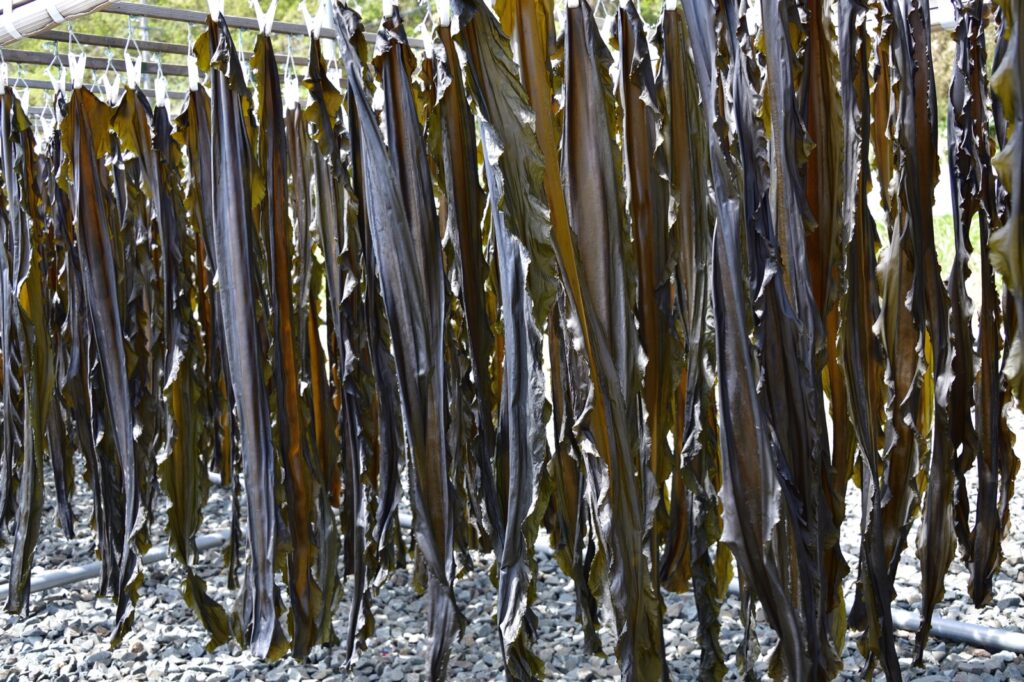
Seaweed was the most common of our ten categories, sweet potato aside. Ireland has a research example (Teagasc, 2026), but no commercial brand outside Japan that puts seaweed on its label turned up in the English-language sources we checked. Hidaka no Whey Buta (日高のホエー豚) in Hokkaido is fed whey along with a plant-based feed that includes powdered Hidaka kombu (kelp). Nanbu Fukura Buta (南部福来豚) in Iwate Prefecture blends in seaweed powder and sesame.
Wood vinegar, bamboo vinegar, and charcoal (19 brands)
Wood vinegar is a liquid condensed from the smoke of charcoal making; bamboo vinegar is the bamboo version. Nineteen brands mention them or charcoal, and producers’ explanations cluster around two aims: a healthy gut and less odor. Queen Pork (クイーンポーク) in Gunma Prefecture adds wood-vinegar acid to its designated compound feed. Kagoshima OX (鹿児島OX) adds bamboo vinegar, and the producer says the goal is raising pigs without relying on antibiotics.
Mugwort, herbs, and the “Jiyoton” brands (12 brands)
Some brands mix in mugwort (yomogi) or herbs from traditional East Asian medicine. Shimofuri Herb (霜ふりハーブ) in Ibaraki Prefecture uses a herb-blend feed with mugwort powder, dried ginger, dokudami (a wild herb, Houttuynia), Korean ginseng, and more. All three of mugwort, seaweed, and wood vinegar appear together in the Jiyoton brands. Jiyoso, a mixed feed from Nohken Techno Co., Ltd., is made from refined wood vinegar, zeolite, seaweed, mugwort, and more; the company’s history lists Jiyoso in 1983 and the “Jiyoton” pork brand in 1987. Kamifurano Jiyoton (かみふらの地養豚) in Hokkaido, Aomori Jiyoton (青森地養豚), and Ibaraki Jiyoton (いばらき地養豚) share this system.
Natto (2 brands, plus 1 that uses only the natto bacterium)
Natto is fermented soybeans, sticky and pungent. Its bacterium, Bacillus subtilis, is known to feed regulators: in 2012 the EU authorized a specific strain of the same species as a feed additive. Feeding natto itself to pigs outside Japan, though, did not turn up in the English-language sources we checked. Nattokuton (納豆喰豚) in Gifu Prefecture adds natto powder to its finishing feed, and its very name is built on natto. Kishu Umebuta in Wakayama also uses food byproducts that include natto. Rokkin Pork (六金ポーク) in Saitama Prefecture adds only the bacterium, so we counted it separately.
Kinako (4 brands)
Kinako is roasted soybean flour, a nutty powder used on Japanese sweets. Roasted soybeans are a feed ingredient overseas as well, but we found no example outside Japan of feeding them as kinako in the English-language sources we checked. Hazama no Kinako Buta (はざまのきなこ豚) in Miyazaki Prefecture is raised on a designated compound feed containing soybean kinako; the producer says the aim is pork with a mild flavor. Wainton (ワイントン) in Yamanashi Prefecture gets kinako in its home-mixed feed and, morning and evening, a white wine made for it by a Katsunuma winery.
Sweet potatoes and kurobuta (31 brands)
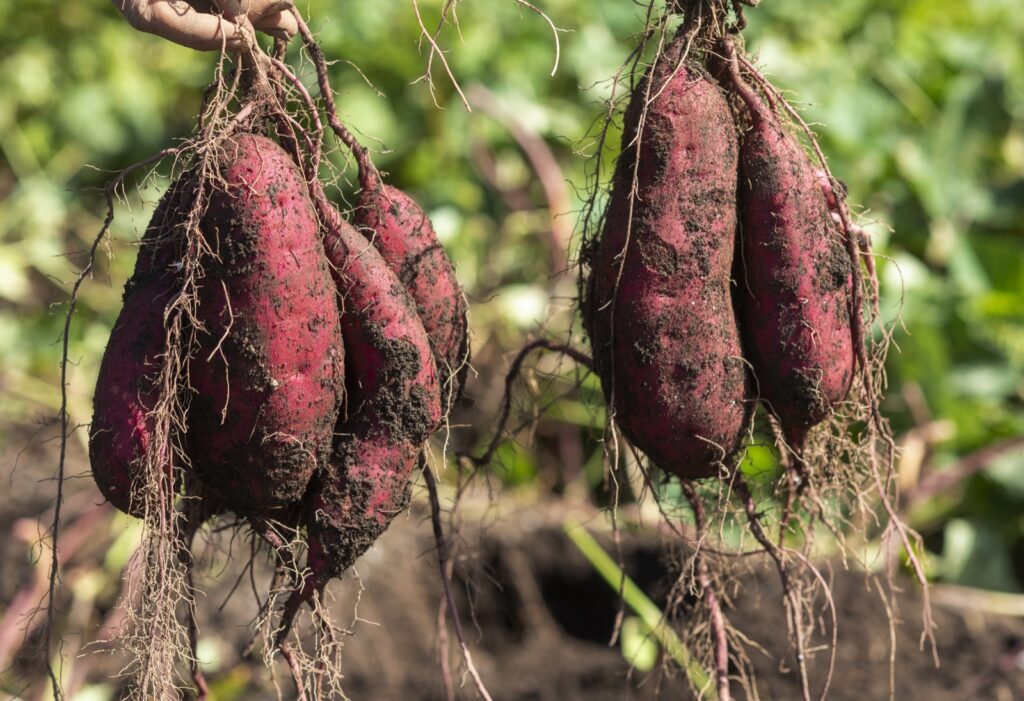
Sweet potato is the standby, named by 31 brands. Under the Kagoshima Prefecture Kurobuta Producers’ Council standard, a “Kagoshima Kurobuta” pig must get a feed containing 10 to 20 percent sweet potato for at least 60 days in the late finishing stage (as reported in aff, MAFF’s public magazine). Kurobuta means “black pig,” the Berkshire breed as raised in Japan, and Kagoshima Kurobuta (かごしま黒豚), Kuro no Takumi (黒の匠), and the other Kagoshima black-pig brands are finished this way (see our guide What Is Kurobuta?). Hyuga Osatsu Pork (日向おさつポーク) in Miyazaki Prefecture gets sweet-potato meal for at least 60 days of the finishing stage, and Awa no Kintoki Buta (阿波の金時豚) in Tokushima Prefecture is fed the local “Naruto Kintoki” sweet potato.
Found overseas too, but done the Japanese way
Acorns: Iberico’s law, and acorn flour in Aso and Miyazaki
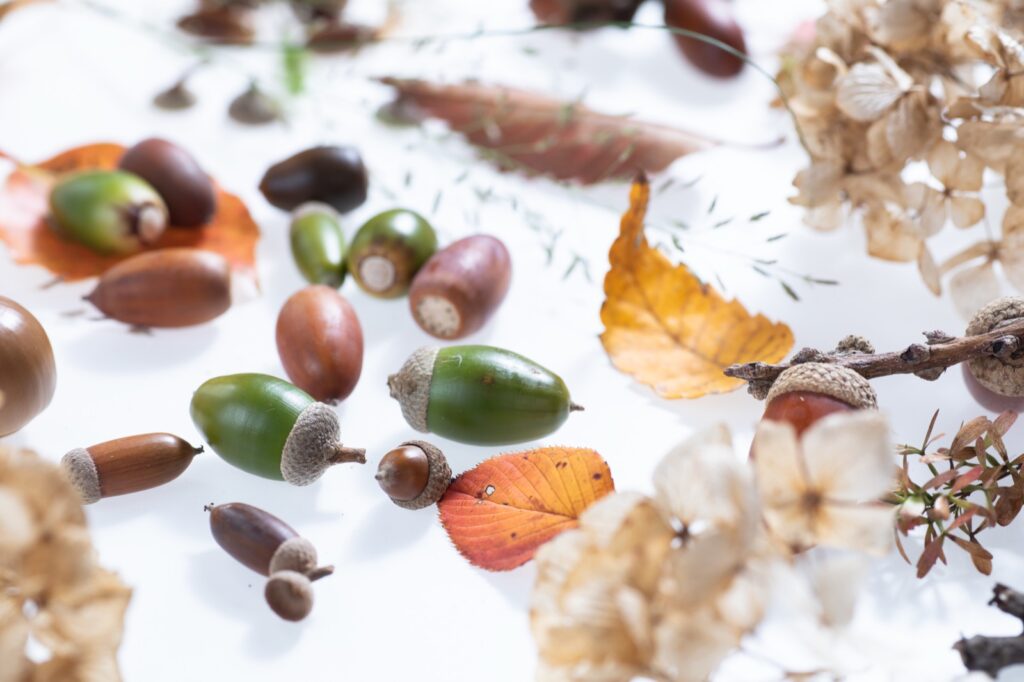
Spain’s Iberico is the famous acorn-fed pig, but acorns are required only for the “de bellota” grade. Under Spain’s Royal Decree 4/2014, the pigs enter the dehesa, the oak pasture, between October 1 and December 15; gain at least 46 kg over more than 60 days; receive no supplementary compound feed during this finishing period on pasture; and are slaughtered at 14 months of age or older. The “cebo de campo” grade is raised on compound feed made mainly of cereals and legumes, but outdoors, where the pigs may also draw on natural resources. In Japan, acorns (donguri) are ground into flour and mixed into compound feed. Aso Donguri Pork (阿蘇どんぐりポーク) in Kumamoto Prefecture gets a home-mixed feed with acorn flour, served with Aso spring water, and Donguri no Megumi (どんぐりの恵み) in Miyazaki Prefecture gets a feed containing acorn flour, copra flakes, and at least 10 percent small grains (麦類).
Whey: the Parma ham tradition, and Japan’s dairy country
Whey is the liquid left when milk becomes cheese or yogurt. The Parma ham specification states that liquid feed may, by tradition, include whey or buttermilk. It is optional, with a cap: whey and buttermilk combined may not exceed 15 liters per pig per day. In Japan, Nakashibetsu Milky Pork (なかしべつミルキーポーク) in Hokkaido is finished from 110 days of age on a home-mixed feed with whey powder and cheese. Junpaku no Bianca (純白のビアンカ) in Niigata Prefecture is given whey from the production line of Yasuda Yogurt.
Brewer’s grains, hops, and brewer’s yeast (10 brands)
Brewing leftovers go to pigs around the world. The Japanese twist is that hops themselves have become a brand name. Tono Hop Ton (遠野ホップ豚) in Iwate Prefecture gets the brewing byproducts of Tono-grown hops, dried and processed on the farm and fed in the finishing stage. Azumino Houbokuton (安曇野放牧豚) in Nagano Prefecture, a pasture-raised brand, eats spent malt from a craft brewery along with local produce that changes with the seasons.
Bread, noodles, and sweets: Japan certifies food recycling (42 brands)
Forty-two brands mention “eco-feed,” Japan’s term for feed made from bread crusts, udon noodles, leftover sweets, and similar food byproducts. EU Regulation (EC) No 1069/2009 bans feeding catering waste from kitchens and restaurants to livestock, while former foodstuffs such as bread from manufacturing and distribution can become feed if conditions are met (European Commission guidelines). Japan’s government promotes feed made from food byproducts, and a certification program run by the Japan Scientific Feeds Association (一般社団法人日本科学飼料協会) began in 2009. At the end of June 2026, 29 feeds held the certification (feed products, not pork brands), and production in fiscal 2025 (preliminary) was about 1.03 million metric tons on a total digestible nutrients (TDN) basis. MAFF notes regional patterns: potato-processing residue in Hokkaido, surplus food near big cities, shochu lees in Kyushu. Kurao Pork (Baumkuchen-ton) (藏尾ポーク/バームクーヘン豚) in Shiga Prefecture mixes in trimmings of baumkuchen, the layered German cake, from the confectioner Taneya. Go Pork (郷Pork) in Nara Prefecture uses no compound feed at all, turning collected vegetables, fruit, and noodles into feed on the farm.
Unusual feeds: from avocado to baumkuchen
Feeds named by only one or a few brands.
| Feed | Brand (prefecture) | What the brand page says |
|---|---|---|
| Avocado oil | Avocado Sunrise Pork (アボカドサンライズポーク), Chiba | Special feed with Mexican avocado oil added; pasture-style raising |
| Pumpkin and nagaimo yam | Dorobuta (どろぶた), Hokkaido | Nuts and grass roots, plus Tokachi-grown pumpkin and nagaimo yam |
| Bamboo powder | Bambuu (ばんぶぅ), Ibaraki | Feed blended with bamboo powder |
| Buckwheat | Hayashi Farm Ton – Genbuta / Shinshu Yukibuta (ハヤシファーム豚 幻豚・信州雪豚) and Chiyofuku Buta (千代福豚), Nagano | Buckwheat, rice koji, almonds, and more / soybeans, buckwheat, and yogurt by season |
| Olives | Olive Ton (オリーブ豚) and Olive Yume Buta (オリーブ夢豚), Kagawa, Boso Olivia Pork (房総オリヴィアポーク), Chiba, Kirishima Olive Red Pork (霧島オリーブ赤豚) (Miyazaki and Kagoshima) | Dried powder of pressed olive fruit at 0.5% or more for at least 30 days before shipping (Olive Yume Buta) |
| Peanuts | Hagi Mutsumi Buta (萩むつみ豚), Yamaguchi | Eco-feed of dried, ground bread, rice bran, peanuts, gyoza wrappers, and more makes up about 60% of the feed |
| Sugarcane molasses and fossil coral | Yanbaru Shimabuta Agu (Okinawa) | Molasses, awamori mash lees, fossil coral from Yonaguni Island, mugwort, seaweed, and more |
| Garlic | Oirase Garlic Pork (奥入瀬ガーリックポーク) and Towada Garlic Pork (十和田ガーリックポーク), Aomori, Shiretoko Pork (知床ポーク), Hokkaido | Aomori-grown garlic powder in a designated compound feed / garlic powder late in the finishing stage |
| Banana | Banana Pork (バナナポーク), Chiba, Ebisu Mochi Buta (えびすもち豚) and Kohaku (琥珀), Hyogo | Dried Philippine bananas for the two months before shipping (Banana Pork) |
| Pineapple | Painubuta (南ぬ豚) and Pineapple Pork (パイナップルポーク), Okinawa | Fermented pomace of Ishigaki Island pineapple / feed containing dried pineapple |
| Apple | Tsugaru Buta (つがる豚), Aomori | Tsugaru-grown feed rice and Tsugaru apple pomace, fed as a liquid feed |
| Egoma (perilla) and flaxseed | Egoma Buta (エゴマ豚), Fukushima, Egoma Buta (Ishinomaki) (荏胡麻豚), Miyagi, Tono Amabuta (遠野亜麻豚), Iwate | Perilla seeds at 3% from one month before shipping / perilla grown in Shikama Town / flaxseed oil and perilla oil cake |
| Stevia | Joshu Stevia Sodachi (上州ステビア育ち), Gunma | Expander-processed plant-based compound feed with stevia blended in |
Some brands lean on a regional byproduct, like Tsugaru’s apple pomace; others bring in imported ingredients, like avocado oil from Mexico.
Why did Japanese pig feed turn out this way?
Three reasons stand out. First, dependence on imported feed. Preliminary figures for fiscal 2025 put Japan’s feed self-sufficiency rate at 24 percent overall and 11 percent for concentrate feed such as grain, which makes domestic byproducts and off-grade produce attractive as feed. Rice grown for feed has also been pushed along by subsidies, and 101 of the 401 brands (25 percent) mention rice. However, the reported planted area for the 2026 crop fell 48.7 percent from the previous year, while support for general varieties is being reduced in stages. Second, pig farms sit close to the food industry, and a region’s industries end up as pig feed. Third, the sheer number of brands. The Japan Brand Pork Encyclopedia lists 419 brands, and some are named after what the pigs eat: TEA-ton, Yuzu Pork, Nattokuton, Donguri no Megumi. Commercial brands outside Japan built on such feeds could not be confirmed in the English-language sources we checked (checked October 27, 2026). Making the feed into the name and the story: that is the Japanese touch.
Does it differ by region? Rice in Tohoku, sweet potato in Kyushu, bread in Kansai
Looked at by region, the feed reflects the land. In Tohoku, the northeast of Japan’s main island, 21 of 53 brands (39 percent) mention rice, above the national 25 percent. In Kyushu, the southwestern island, 13 of 84 brands (15 percent) mention sweet potato (7 in Kagoshima, 6 in Miyazaki). In Kansai, around Osaka and Kyoto, 12 of 15 brands (80 percent) mention bread, noodles, or confectionery scraps. Where brands are few, a handful of pages can swing the percentage, so read these as tendencies.
| Region (brands) | Standout feed | Brands (share) |
|---|---|---|
| Hokkaido (27) | Barley and wheat | 15 (55%) |
| Tohoku (53) | Rice | 21 (39%) |
| Kanto (106) | Barley and wheat | 48 (45%) |
| Kansai (15) | Bread, noodles, and confectionery scraps | 12 (80%) |
| Kyushu (84) | Sweet potato | 13 (15%) |
| Okinawa (10) | Brewing byproducts such as sake lees and brewer’s grains / products of the sea such as seaweed and fish meal / microbes such as lactic acid bacteria and yeast | 5 (50%) / 4 each (40%) |
Reading pork labels and comparing flavors
At the butcher counter and on menus, feed doubles as a selling point: mugi-shiage (finished on small grains such as barley or wheat), imo-buta (sweet-potato pork), whey-buta (whey pork). Producers’ explanations cluster around “sweet fat” and “little odor,” but those are the producers’ aims; breed, rearing period, and other conditions overlap with feed, so this site does not claim that feed decides the taste. Our suggestion is a side-by-side tasting: two brands with different feeds, the same cut, the same cooking method. Then judge for yourself whether the producer’s aim comes through.
How we counted, and the limits
We worked from the 419 Japanese-language articles in the Japan Brand Pork Encyclopedia (as of October 27, 2026). The 401 brands whose Feed section carries details form the denominator; we classified and counted the words in those entries (18 brands have no entry or keep the feed undisclosed). The heading counts above pull out each feed by name, while the table below tallies by category, so the two differ slightly (bread, noodles, and sweets appear as 42 and 44, for example). For Kyushu’s sweet potato figure, we counted brands in the seven Kyushu prefectures among the 31 that mention sweet potato, excluding sweet-potato shochu lees and unspecified roots or tubers.
| Category (nationwide; a brand can fall into several) | Brands | Share (of 401 brands) |
|---|---|---|
| Designated or custom-formulated compound feed (including undisclosed details) | 283 | About 70% |
| Barley and wheat (barley, wheat, other small grains) | 160 | 39% |
| Rice (feed rice, brown rice, rice bran) | 101 | 25% |
| Corn | 88 | 21% |
| Bread, noodles, and confectionery scraps (food recycling) | 44 | 10% |
| Microbes such as lactic acid bacteria, yeast, and natto bacillus | 43 | 10% |
| Sweet potatoes and other roots and tubers | 37 | 9% |
| Products of the sea such as seaweed and fish meal | 32 | 7% |
| Brewing byproducts and fruit, such as sake lees, brewer’s grains, and fruit | 31 | 7% |
| Herbs and medicinal plants | 26 | 6% |
| Wood vinegar, bamboo vinegar, and charcoal | 19 | 4% |
| Dairy, whey, and yogurt | 10 | 2% |
| Tea, green tea, and tea leaves | 7 | 1% |
| Acorns and nuts | 6 | 1% |
Three limits. First, we counted the wording producers publish, not feed ratios or amounts; the 283 brands under “designated or custom-formulated compound feed” include brands that do not disclose what goes into it. Second, pulling out words invites mistakes. Our first pass filed a brand that uses tea as bedding under “tea” and “calcium carbonate” under “charcoal”; we fixed the dictionary and recounted, but oversights may remain. Third, the overseas comparison was limited to primary sources, which are not national averages. No feed here can be declared “found nowhere else in the world.” The most we can say is that no commercial brand outside Japan built on it was found in the English-language sources we checked.
Japanese pig feed: frequently asked questions
Q. Do Japanese pigs eat corn too?
Many brands do. MAFF data put corn at about half of all compound-feed ingredients in Japan, and 99 percent of the corn imported in fiscal 2025 came from the United States. The mix differs by brand, though: some brands leave corn out of the finishing feed, and some use no compound feed at all. Unusual feeds such as shochu lees or tea leaves are added on top of that base.
Q. Are there really feeds found nowhere else in the world?
We found no example of feeding shochu lees, ume, natto, or kinako in that form to pigs outside Japan in the English-language public documents and papers we checked (checked October 27, 2026). But research on feeding alcohol lees and green-tea byproducts to pigs exists in China, South Korea, and Vietnam, and in 2012 the EU authorized a specific strain of Bacillus subtilis, the same species as the natto bacterium, as a feed additive. What this article treats as distinctly Japanese is the culture of making the feed into the brand’s name and story.
Q. Does different feed mean different taste?
Many producers describe their aim as sweeter fat and less odor, but breed, raising period, and other conditions overlap with feed, so this site does not claim that feed alone decides the taste. We recommend tasting two brands side by side, same cut, same cooking method, and judging for yourself.
Summary
The base of a Japanese pig’s diet is compound feed, grain combined with soybean meal and other protein sources, and the mix varies by brand. What stands out is the side dish on top. Of 401 brands, 68 name shochu lees, tea leaves, ume, seaweed, natto, kinako, or something similar; add sweet potato and it is 93. Japan has turned those side dishes into brand names and stories. The next time you see “imo-buta” or “whey-buta” on a label, think about the regional ingredients in that pig’s feed.
Sources and related links
The feed details for each brand come from the Feed section of the brand pages linked in the text (Japan Brand Pork Encyclopedia). For the overseas comparison and the policy figures, we consulted the following primary sources (all checked October 27, 2026).
- Kansas Agricultural Experiment Station Research Reports (Swine Day 2023), “Effects of Increasing Energy or Lysine in Soybean Meal-Based Diets on Early and Late Finishing Pig Performance”
- University of Illinois (H. H. Stein), “Alternative Grain Sources in Diets Fed to Pigs”
- Journal of Animal Science and Biotechnology (2013, Aarhus University and others), “Models to quantify excretion of dry matter, nitrogen, phosphorus and carbon in growing pigs fed regional diets” (Europe PMC)
- BOE (Spain’s official gazette), Real Decreto 4/2014 (quality standard for Iberico meat, ham, and other products)
- Consorzio del Prosciutto di Parma, “Disciplinare Prosciutto di Parma” (May 17, 2025 edition, Italian)
- Consorzio del Prosciutto di Parma, “Product Specifications for the Prosciutto di Parma” (May 17, 2025 edition, English)
- Teagasc (Ireland’s Agriculture and Food Development Authority), “Seaweed by-products – Sustainable feed ingredients for pigs?”
- University of Tokyo, Graduate School of Agricultural and Life Sciences (English), research on pigs fed shochu lees (March 2020)
- Animal Production Science (2012, South Korea), study on feeding green-tea byproducts to finishing pigs (DOI)
- Frontiers in Microbiology (2022, China), study on feeding fermented yellow-wine lees to finishing pigs
- EU Implementing Regulation No 91/2012 (authorization of a specific strain of Bacillus subtilis as a feed additive; UK archived version)
- EU Regulation (EC) No 1069/2009, Article 11 (feeding restrictions; UK archived version)
- European Commission, guidelines on the use of former foodstuffs as feed (PDF)
- MAFF, About eco-feed (エコフィードについて)
- MAFF, Situation of eco-feed (エコフィードをめぐる情勢), October 2026
- MAFF, Situation of feed, data edition (飼料をめぐる情勢(データ版)), October 2026
- MAFF, Situation of concentrate feed (濃厚飼料をめぐる情勢), October 2026
- MAFF, Q&A on the direct payment budget for paddy field use, 2026 crop (令和8年産 水田活用の直接支払交付金予算に係るQ&A)
- MAFF public magazine aff, August 2020 issue, “Kurobuta” (黒豚; interview with the Kagoshima Prefecture Kurobuta Producers’ Council)
- Nohken Techno Co., Ltd., “Jiyoso” (地養素)
- Nohken Techno Co., Ltd., Company information and history (企業情報(沿革))
Last updated
October 29, 2026